First Aid Kit with Medical Essentials
A Bright, Friendly Design—But Does It Stitch Well?
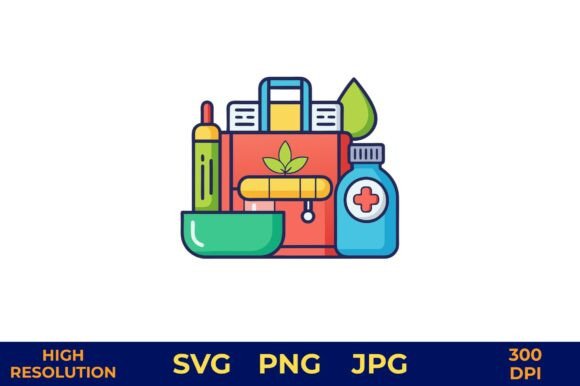
As someone who’s stitched over 300 custom embroidery projects—from boutique baby onesies to Etsy shop merchandise—I opened First Aid Kit with Medical Essentials expecting cheerful energy. And it delivers: a clean, colorful vector illustration of gauze, bandages, antiseptic wipes, tweezers, and even a tiny lavender sachet—all arranged inside a well-defined kit outline on that bold orange background. It feels upbeat, approachable, and gently reassuring—not clinical or sterile. That matters. When you’re embroidering a “get well soon” pillow cover for a new mom or stitching this onto a nurse’s apron for a hospital gift shop, tone is half the design.
Where This Design Naturally Shines
I tested First Aid Kit with Medical Essentials as a tote bag design first—printed a mockup, then ran a quick stitch simulation in my embroidery software. Its balanced composition (central kit shape, clear negative space around key items) translates beautifully to medium-to-large hoop sizes. On a cotton canvas tote? Crisp. On a midweight sweatshirt? Confident and legible at 4.5" wide. It also works surprisingly well as an embroidered patch—especially when backed with tear-away stabilizer and stitched with satin-stitched edges around the main kit silhouette.
For craft businesses and Etsy sellers, this is a smart seasonal asset. Think: holiday gift sets (pair it with hand-poured lavender soap), nursery decor (stitched onto a muslin wall hanging), or small shop merchandise like embroidered tea towels for a wellness-themed boutique. The bright orange background in the original SVG suggests strong contrast potential—but remember: that background isn’t stitched. You’ll be embroidering *only* the illustrated elements, so your fabric color becomes the true backdrop.
Real-World Embroidery Considerations
This isn’t a minimalist monogram—it’s a detailed machine embroidery design with multiple small components. The tweezers, scissors, and pill bottle cap all rely on fine running stitches and tight satin outlines. That means:
- Hoop size matters. Below 3.5", detail starts to blur. Avoid using First Aid Kit with Medical Essentials on caps or curved surfaces unless you’ve confirmed its scalability in your digitizing software.
- Fabric texture changes everything. On terry cloth towels or fleece, those small medical icons can sink or distort. Use cut-away stabilizer underneath—and consider simplifying one or two interior elements (like the antiseptic wipe folds) if stitching on highly textured fabric.
- Dark fabric needs strategy. The original SVG uses light-on-orange contrast, but embroidery thread won’t pop the same way on navy or charcoal. Test thread colors carefully: soft teal or warm gray often reads cleaner than stark white on dark backgrounds.
- Washability is non-negotiable. If you’re making baby embroidery or personalized gifts meant for daily use, check stitch density. Dense fill stitches in the kit base or bandage rolls hold up better through laundering—but may feel stiff on delicate fabrics like bamboo jersey.
What This Design Says About Your Brand
Using First Aid Kit with Medical Essentials signals care, preparedness, and warmth—not just decoration. A handmade product with this embroidered on a linen kitchen towel tells customers you value thoughtful utility. A custom apparel version on a unisex sweatshirt says “practical kindness.” That kind of quiet professionalism builds trust, especially for healthcare-adjacent small shops, wellness coaches, or occupational therapy practices selling branded merchandise.
But here’s what I watch for: overcomplication. Because it’s colorful and detailed, it’s tempting to pair it with other busy graphics—say, a floral border or script text. Resist. Let the design breathe. Its strength is clarity, not clutter. For Etsy listings, use it solo on a clean mockup. For printable mockups, try it on both light and dark fabric previews—then compare how the medical items read at thumbnail size. If the tweezers vanish in a 200px-wide preview, scale back or simplify before uploading.
Practical Designer Notes Before You Stitch
- Always test First Aid Kit with Medical Essentials on scrap fabric first—especially if you’re using it for commercial embroidery or client work.
- Review stitch density in your embroidery software. High-density fills look rich but add weight; low-density versions stitch faster and drape softer.
- Inspect small details at actual stitch size: Can you distinguish the antiseptic wipe from the gauze pad? If not, adjust underlay or reduce complexity.
- Try black-and-white mockups. Does the design retain personality without color? It should—structure and spacing carry more weight than palette in embroidery.
- Confirm licensing terms before selling finished products or bundling it into digital embroidery files. Since it’s listed as an Illustration and Graphics asset, verify whether commercial use is included.
- Match stabilizer to fabric: cut-away for knits, tear-away for stable wovens, fusible for lightweight linens.
Final Thought: A Thoughtful Addition to Your Design Assets
First Aid Kit with Medical Essentials isn’t flashy—but it’s reliable. It doesn’t shout. It supports. That makes it ideal for makers who prioritize meaning over momentum: the Etsy seller building a curated collection of wellness-themed craft business assets, the small shop owner refreshing their holiday embroidery lineup, or the apparel decorator adding gentle, human-centered designs to their custom apparel library. It won’t dominate a tradeshow booth, but it will earn repeat orders from clients who value clarity, kindness, and craftsmanship. Just remember: great embroidery starts with smart choices—not just pretty files. Test it. Tweak it. Then let it do what it does best: help people feel seen, supported, and just a little safer.